
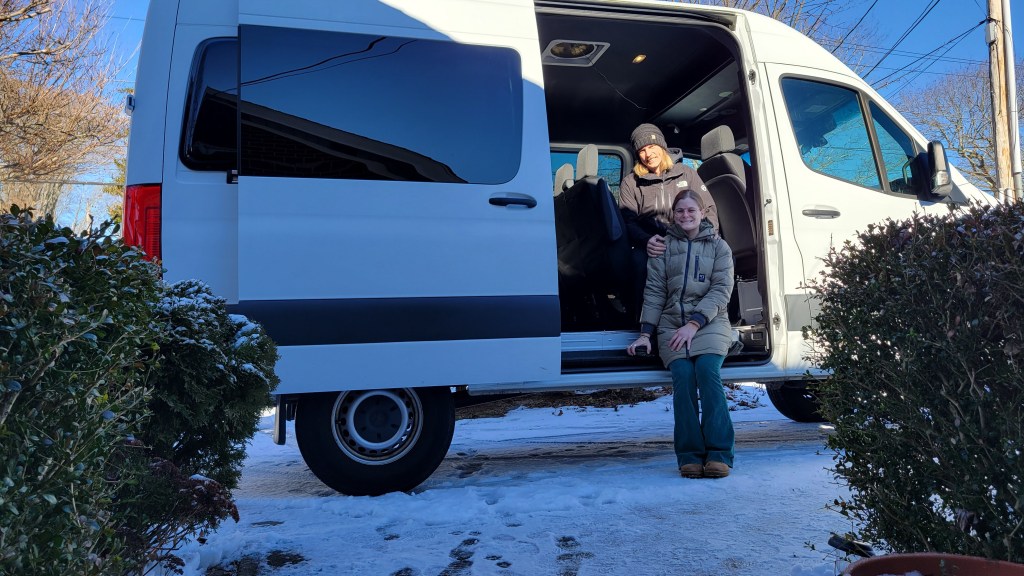
For years, we followed the van-lifers and their adventures. Our dream was to one day be van-lifers of our own. The idea of a temporary rolling home for our adventures was both desirable and exciting. We saved ideas from others living van life and built up our digital bulletin board of inspiration.
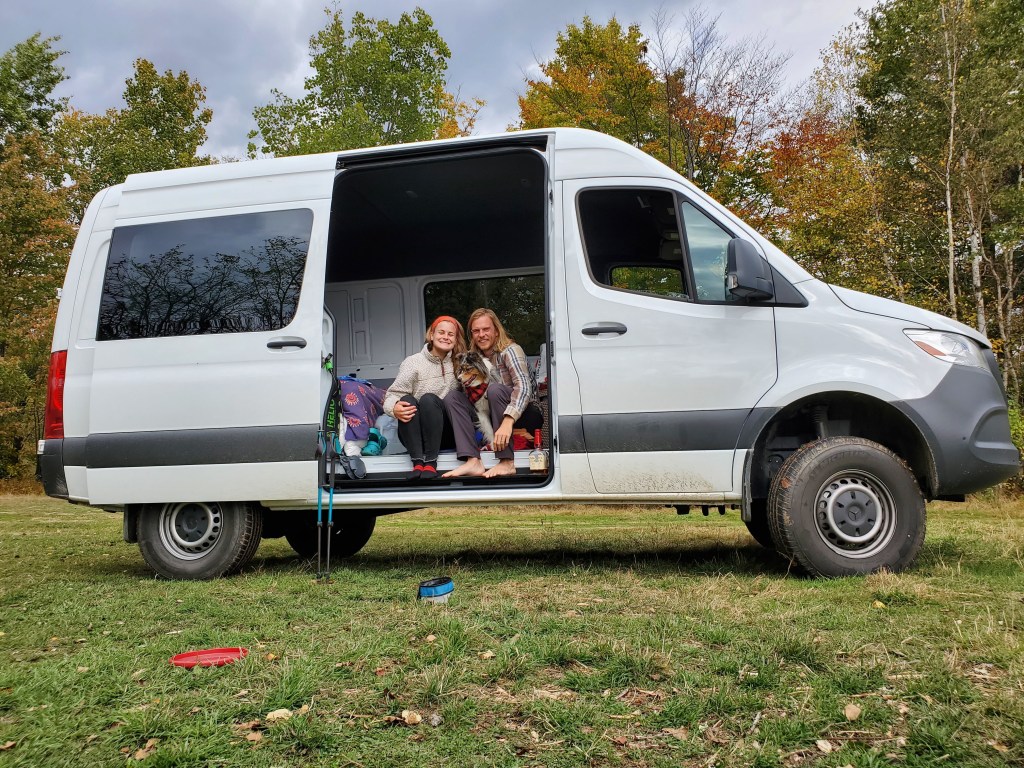
In 2020, just before the van-life saga blew up, we obtained our very own 4×4 Sprinter van. Rare now, we were able to obtain ownership of our van brand new at a low leftover price with 0% interest on our loan. Dotty (what we would name our van) was a 2019 model year, 4×4, 144 high-roof. She was beautiful and we were excited to make her ours.
After three years of adventure and memories with Dotty, we recently decided to sell and get out of van-life. Not because we did not love van-life, but because there were some unexpected realities that came into focus for us:
- Build-Out Requires Abundance of Time, Handiness, Additional Investment, or Ability to Learn New Skills
You either have boatloads of money to invest in a van build-out or you are a modest DIY-er on a budget. We are the DIY-ers. We knew our van would not consist of the many luxuries that van-life has come to be conceived as thanks to Instagram. For a the majority of our ownership, we described our van’s design as modular. We did not wire or plumb it. We also did not build counters and cabinets right away. Instead, we took our full-size spare bed and threw it in the back. We had a smaller folding table that we used voile straps to fasten to the sidewall and keep in place. This tabletop was used a ton for meal prep and cooking. We used a few totes to hold our food, paper goods, and regular supplies we required. We installed a headliner shelf that provided ample storage for other items. We also found some really great magnetic hooks, paper towel holder, shelves that made the perfect night stands, and bath towel hangers that easily magnetized to the metal walls. Instead of an electrical system, we invested in a 2500 Jackery, a portable power station, that allowed us to run a string of lights in the van at night, along with powering any other electrical needs. For cooking, we used a propane powered Jetboil / Coleman stove. We installed the swivel seat systems to allow ourselves the captain’s and passenger’s chairs as seating when hanging out. We also installed a MaxAir fan in the roof and two Flarespace flares, one with a window and screen.
As time went on, we eventually did progress to building out a bed system with 80-20 aluminum. This provided additional storage underneath the bed and a bigger footprint for our bed.
Our investment in our van build was minimal compared to many of the luxury builds we’ve grown accustomed to seeing. However, we still spent thousands of dollars on equipment, materials, and installations. I think the best things to remember is that you do not need your setup to be flashy. You just need it to be functional so it can work for you. We did not have running water or a bathroom in our van. Instead, we had a portable Nemo Shower that we would pre-full with water before our trips. If we wanted a hot shower and were not at a campground, we would boil a tea kettle of water and add it to the shower to achieve this. We also used this shower system as a way to wash our pots / pans. Otherwise, we mostly used paper plates and bowls along with wooden utensils. I believe that the Nemo Shower was seven gallons and with a little awareness and conservation, we truly never exhausted our water. I should also note that we tended to bring several 2.5 gallon jugs of drinking water, which was separate from the 7 gallons in the Nemo shower, and only used for drinking.
Lastly, if you are busy small business owners like us, or have little personal time – or do not desire more in-depth projects within your free time – carefully consider if a van build out is realistic for you. While I enjoyed the van projects, I know that my husband found them to be daunting. Figuring certain projects out required a ton of reading and research before we could embark on the project ourselves. Once we did start the projects, they tended to take longer than we expected they might. We had our van for over three years and had intended to do much more to convert it than what ended up being reality. Why? Because when it came down to it, we wanted to be using it vs. spending our time completing projects for it. So, we did the minimum and got major enjoyment from it, but it was never truly what we envisioned it would be. - The East Coast is Not Van-Friendly (unless you want to pay to stay at campgrounds)
When we got our van, we were so thrilled at the thought of camping anywhere we could pull-off or pull-over. However, this notion quickly snapped to reality. Sadly, the east coast – New England particularly – is not van-friendly. We hear of many places out west where you can drive into the wilderness and park it, sometimes without reservations and for free. There are very few spots on the map where you can do this in New England. We will not reveal where these gems exist, however. Part of the adventure is discovering these magic places on your own and only sharing them with those you trust to ensure they remain special and unharmed.
Most trips, we looked ahead to find campgrounds where we could obtain a campsite. We did not always reserve ahead, which made our trips feel more spontaneous, but we rarely pulled down a dirt road, found a cozy spot, and slept overnight. When we were lucky enough to learn of these remote free-camping, first-come-first-serve places it was truly a treat.
I will never forget the first night we spent in the van. It was the first night of our honeymoon. We always thought that van life would allow us to sleep at trailheads and rise early the next morning for our hikes having had a great night’s rest. I could not have been more wrong. The first morning of our honeymoon, we woke up and were outside of our van, excited and getting ready for one of our favorite hikes with our dog. Other hikers were outside of their cars getting ready for an early morning hike as well. Unexpectedly, and angry man drove up in front of us and started angerly expressing his opinion and distaste surrounding the fact that we slept at the trailhead. I remember feeling like a little kid who had gotten in trouble; it also felt like I had holding a balloon with excitement while he took a pin and popped it. At the time, we did not realize that we were doing anything we should not be. This was a major reason why we wanted a van; to be able to sleep at trailheads when we pulled in late at night to hike or backpack the next morning. Much to our surprise, this was frowned upon in New England (New Hampshire at the time). - Metal Does Not Insulate Well
As I will address below, we insulated our van with Thinsulate. We also sound deadened the areas that we insulated. However, it was a struggle for the van to hold heat and we can attribute this to the van being metal, which is not a good insulator to begin with. - Sprinter Van Dead Spots
Sadly, the front of the van was always freezing. We would drive through the winter mountains with the heat on full-blast for 30+ minutes and still not feel like the vehicle was warm. Now, part of this may contribute to the height of the tall Sprinter, or the fact that the van is made purely of metal. It was so cold and struggled to heat up that we referred to it as the refrigerator. Maybe this would have been different if we had installed a full-van heating system outside of the stock heating and hot air blower. However, we insulated the entire van with Thinsulate (floors and walls) and this made only a minor difference for us. - Be Mindful of the Potential for Leaks
As I mentioned already, we installed a MaxAir fan in the ceiling of our van. We did not complete this install on our own since we were not comfortable cutting into the ceiling with no prior experience. Truly, the fan was a gamechanger. From helping to keep us cool on warmer nights, to allowing us the ability to cook inside the van, we really loved this upgrade. Recently, however, the van had a leak after a load of rain we received. While we know that a leak can easily be repaired, you should be aware that anything that gets wet can lead to both mold and rust. Mold and rust were our two biggest concerns following this incident. We also realized that it was difficult for the sealant used for the fan to remain adhered to the metal, especially since we lived in a four-season climate where temperatures go from hot and humid to bitter cold. Naturally, this will cause the adhesive used to shrink vs. expand, unsealing spots that were once water tight. - Brand Issues / Recalls / Not Covered Under Factory Warranty
Sadly, we continued to run into issues with our van. It started to feel like every time we brought the van in for routine maintenance there was something major that we were told required repair or replacement of the rotors. Now, owning a bike shop, I understand that brakes can become contaminated, however, brand new brakes with this issue should fall under the warranty, especially when the issue had persisted from the first day of ownership. From the day we drove the van off of the lot, the brakes squealed. It was incredibly annoying. The in-dash multi-media unit worked intermittently. The entire screen would go black. The touch-screen would become unresponsive randomly. This was also a pain and when we asked for it to be addressed, the dealership claimed that an update fixed it. This may have been true temporarily, but it never solved the recurring problem. Most recently, we were told that after only three years, the blower motor for the heat was bad. We were also told that this was not covered under warranty, but would require replacement. For a car that was still new in the grand scheme of things, it became frustrating that it had so many issues arise. Our van was produced before the pandemic, so this cannot be attributed to the issues for the car industry attributed to COVID. These issues were entirely separate and unrelated.
Lastly, we received several recall notices during our ownership for various issues. It felt like as soon as one recall had been addressed we were receiving another mailing for an additional recall.
While it was really hard for me to let go of van-life, this was not a hasty decision for us. There were many considerations that led to this decision. Will we miss van-life? Yes, without question. It afforded us so many incredible camping trips and memories, especially with our Australian Shepherd who we recently lost unexpectedly. Rain never stopped us from our camping trips because we had a protected place to stay cozy. Sadly, though, van-life became more of a hassle / trouble than we desired. The vision we had for our van became more of a stressor due to a combination of required time and money to achieve these desired wants. There were also many uncontrollable issues that became realities for us; ones that degraded the experience of fun and free-spirit. So, if you are rich with endless means, go for it. But this may become more than you bargained for with monetary or time restrictions. Now, the barrier to entry is even greater than when we became part of the van community. However, the plus side is the adventures and memories – aside from any obstacles – can be bountiful and hold special for a lifetime.
 fullscend.com