


As I’ve mentioned, this year marked our head-first dive into backpacking. We knew nothing except day-hiking prior to this leap. So, we bought a Big Agnes Copper Hotel UL3 (really, the coolest tent ever!) and all of our other necessary gear. However, when we purchased our hammocks I never thought of them as an alternative to tent camping. For whatever reason, it never crossed my mind as something other than a place to kick my feet up and relax after a long day of trekking.
As we dove deeper and deeper into our passion we read and heard more and more about other backpackers who used their hammocks as their primary camping shelter. This intrigued both of us. Chris was especially intrigued, so, one summer night he gave it a whirl with his sleeping bag and sleeping pad. It is safe to say, he fell in love so much so that he went home and researched hammock shelters and other recommended gear for hammock camping. He quickly ordered an Eno Housefly Rain Tarp (provides added shelter in inclement conditions).


I quickly learned that Chris was partial to hammock camping. He wanted to save the weight in his pack and get a more comfortable night’s rest while in the backcountry. While I was not convinced that this was better than our tent, he would do his best to persuade me to leave the tent at home and sleep in our hammocks before every trip we embarked on. We did end up leaving the tent home multiple times.


What I will say is this: hammock camping is not for everyone. My biggest qualm is the fact that I don’t feel that this is as secure of a camping situation when your dog is one of your trail pals. I always worry about the potential for an interaction with a wild animal in the middle of the night. The last thing I would want is for Raya (our pup) to run off or be in a dangerous situation. Although the shelter of a tent is only a thin layer of fabric between us and the outside world, it somehow made me feel a little more secure (even if that is totally unrealistic).
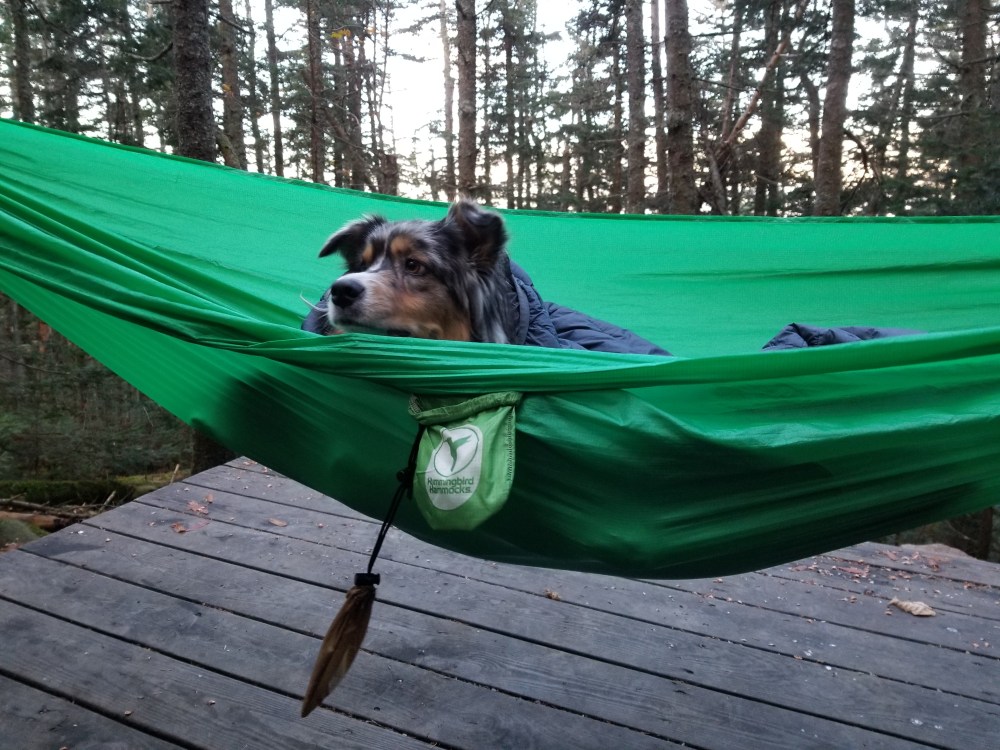
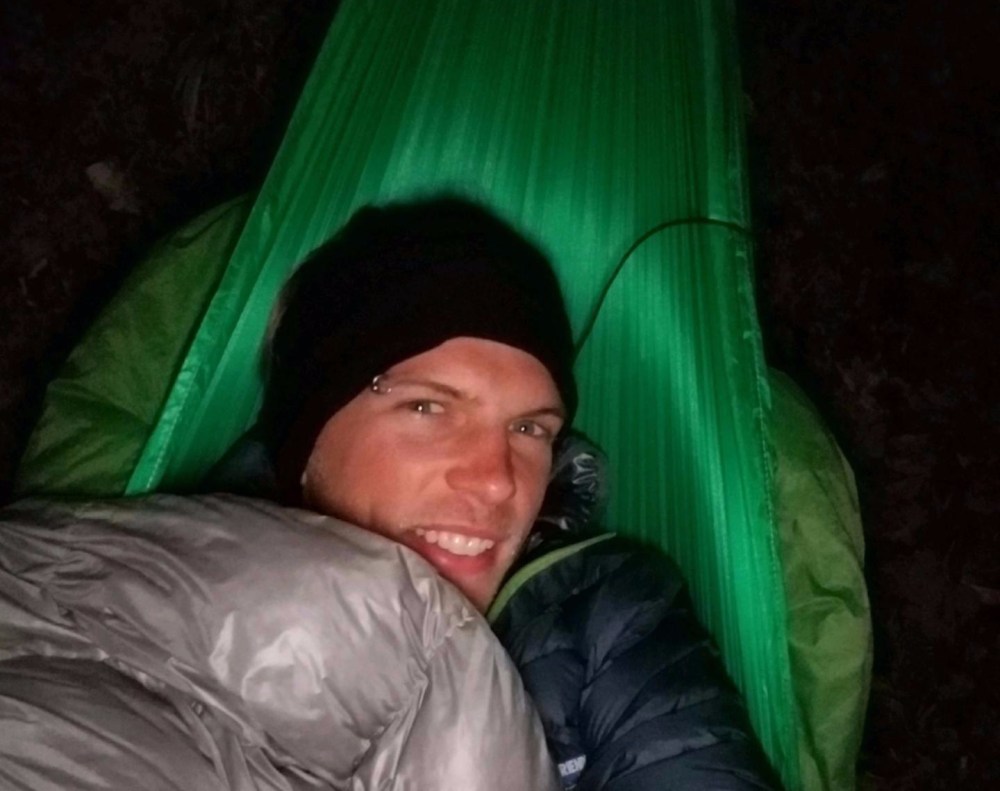
However, I will add this tid bit: I have never slept better in the backcountry than in my hammock. There are a few reasons for that. One, you do not need to find a completely flat spot on the ground; you simply need trees, which are everywhere in the New England wilderness. Second, if you’re like me and you don’t sleep like you’re in a coffin, a hammock allows its owner the ability to move around. Lay on your side , or your back. Pull one leg up as if you’re laying in tree pose (for all my fellow yogis). Hell, throw your arm over your head and bow your legs out in opposite directions if you really want. The point is, you can sleep in nearly any position. You are not limited! So get a good night’s rest while you’re out there – it is not impossible.
In regards to Raya, we have invested in her own sleeping bag, which I previously mentioned in our last article (Enlightened Equipment is the bomb!). We also bought a gear sling that she is able to use as her own hammock if she is in the mood (yes, she is spoiled rotten). With that said, the ENO underbelly gear sling was not created to be a dog hammock, so you cannot expect it to work as one. It will not work for dogs of all sizes & kinds. This is just a creative way we found to keep Raya comfortable and off the ground if she so desired, but try this with your own dog at your own risk. We have at times kept Raya on a leash attached to one of our hammock carabiners and other times we have allowed her to stay off leash. We are very lucky because she is well-trained (kudos to Chris’ hard work) and always stays with us. It also doesn’t hurt that she is usually exhausted once we’re done for the day and has no further interest in exploring or venturing – she fed her soul enough during the day’s adventure.


We did invest in an Eno Housefly Rain Tarp for added shelter. This has come in quite handy. For those of you like us, you realize how temperamental the weather in the backcountry can be. We’ve had many nights with the wind whipping, drizzly mornings, thunderstorms of fury, and cooler temperatures too. The shelter has provided us a bubble of protection from the elements. The Eno Housefly can comfortably fit two hammocks (I recommend one stacked over the other for optimal use of space). The shelter offers adjustable guylines on the center-top ridge and on all corners. This allows the user to tighten the secure the shelter with the option to lower it or get it higher off the ground. Each end of the shelter features adjustable sides that allow you to close the housefly for added warmth or protection.
Another item that we would highly recommend for hammock camping includes an underquilt. This can be used instead of a sleeping pad or in combination with a sleeping pad. However, if your sleeping pad is insulated, the combination of both may prove to be too warm. Regardless, this is all up to your own personal preference. For instance, I run cold typically and Chris runs warm. However, with no sleeping pad (my sleeping pad is insulated) and only my sleeping bag and underquilt (30 degree Rave spoon bag by Nemo Equipment & 10 degree custom Revolt underquilt made by Enlightened Equipment) I ran warm on a cold night in the low twenties. The underquilt is key, though. The reason is simple: when you sleep in a hammock, especially in a down sleeping bag (down feathers do not offer warmth when they are compressed) you are hanging in mid-air, which creates room for cold air underneath you. However, when you cocoon your hammock in an underquilt the down insulation is surrounding you, but not being compressed the way the underside of your sleeping bag is. Therefore, this creates a forcefield of warmth between you and the outside world, keeping you warm throughout the night.

There are also many hammocks to consider. We, like many people, started with ENO hammocks. I still use my Sub7. Chris now has a Hummingbird Single, which he is in love with. The Hummingbird weighs about two ounces less than the Sub7, but Chris has commented that he’s found the setup of the Sub7 to be a little easier than the Hummingbird’s button system. Regardless, these two hammocks are both great options that we personally love.
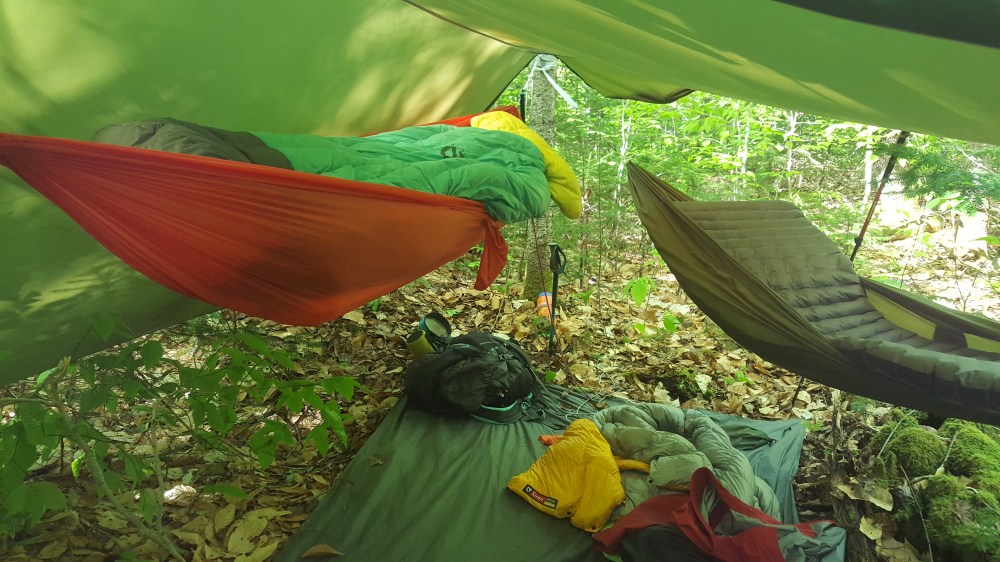
Lastly, I was proven wrong when I told Chris that there is no room for romance when hammock camping. I am a snuggler, especially on a cold mountainside morning. I love to get cozy and just take in the morning and the process of waking up. Although it is hard to snuggle side by side when sleeping in separate hammocks, it is easy to sit side by side and share coffee in the morning or cuddle up next to each other, using the hammock as a seat, to view a glorious sunset off the side of a mountain. It is different than sharing a bed or a sleeping pad, but there can be romantic moments shared when taking this camping route. Felt like this was worth mentioning for all of our other backpackers out there that are couple duos.


As mentioned, hammock camping is not for everyone or it may be for you, but maybe not every time. It is a great way to save weight and also sleep more comfortable, especially if you’re a karate kid – like me – in your sleep. There can be challenges when trying to hammock camp with a dog, which is why we again mention that this is not for everyone. We, however, do enjoy it more than we do not and wanted to at least offer you our insight, advice, and recommendations based on our experience.
As always, thanks so much for your support and readership. Questions and comments are always welcome. Please feel free to email us privately at fullscend@gmail.com.
 fullscend.com